How to play Spades with 4 players
Bid smart. Spades are always trump.
Four players sit in two partnerships, with partners opposite each other. Deal 13 cards each. Bid separately, then combine your bids into one team target. Spades are always trump.
Your bid and your partner’s bid work together
You bid 3 and your partner bids 2, so your team needs at least 5 tricks. Either partner can win them: 1 trick from you and 4 from your partner still makes the contract. Nil bids are scored separately.
| Team tricks | Hand score |
|---|---|
| 4 | −50 |
| 5 | 50 |
| 6 | 51 (+1 bag) |
This example uses Vanikar’s listed partnership scoring, before any accumulated-bag penalty. Every 10 bags costs 100 points.
Practice Spades in your browser🎯 Objective
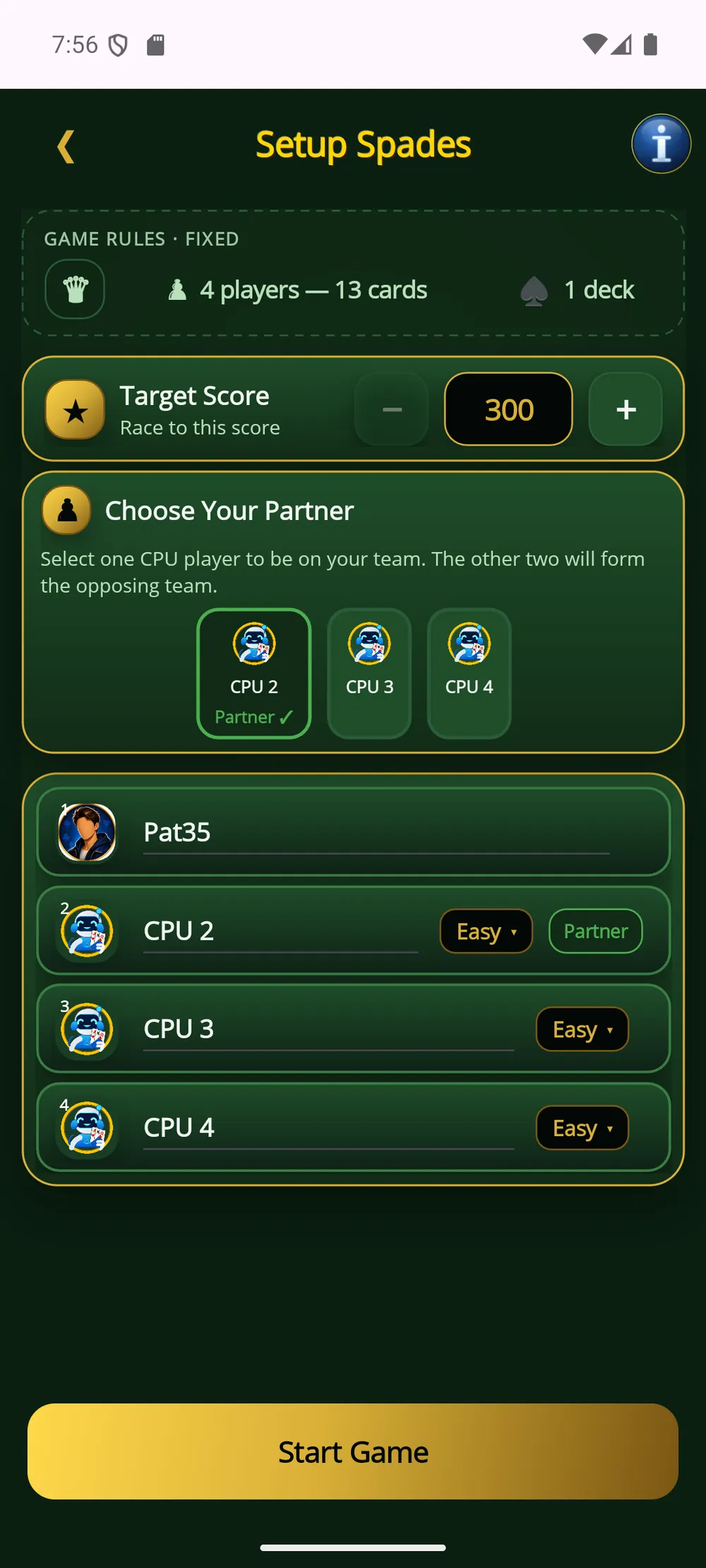
Be the first team to reach the target score — 500 unless you change it at setup.
🃏 Spades Setup & Rules
- Two teams of two sit opposite each other. Deal 13 cards to each player.
- Each player bids 0–13 tricks. Team bid = sum of both partners' bids.
▶ How to Play Spades
- Spades cannot be led until they have been "broken" (played as a discard in another suit), unless a player has only spades.
- Spades beat all other suits. Highest spade wins if any are played; otherwise highest of led suit wins.
- Players must follow suit. If void, play any card including a spade.
🎬 Watch: How to Play Spades

This video is embedded from YouTube and remains the intellectual property of its respective creator and/or rights holder. Vanikar LLC claims no ownership of, or rights in, the video content, and no affiliation with or endorsement by its creator is implied. The video is displayed via YouTube’s public embed feature in accordance with the YouTube Terms of Service and the agreements between YouTube and the content uploader.
📖 Detailed Guide
Setting up your table
- Spades is 4 players in two fixed partnerships — you and the seat across from you are Team A; the other two are Team B. On the setup page you pick which player is your partner.
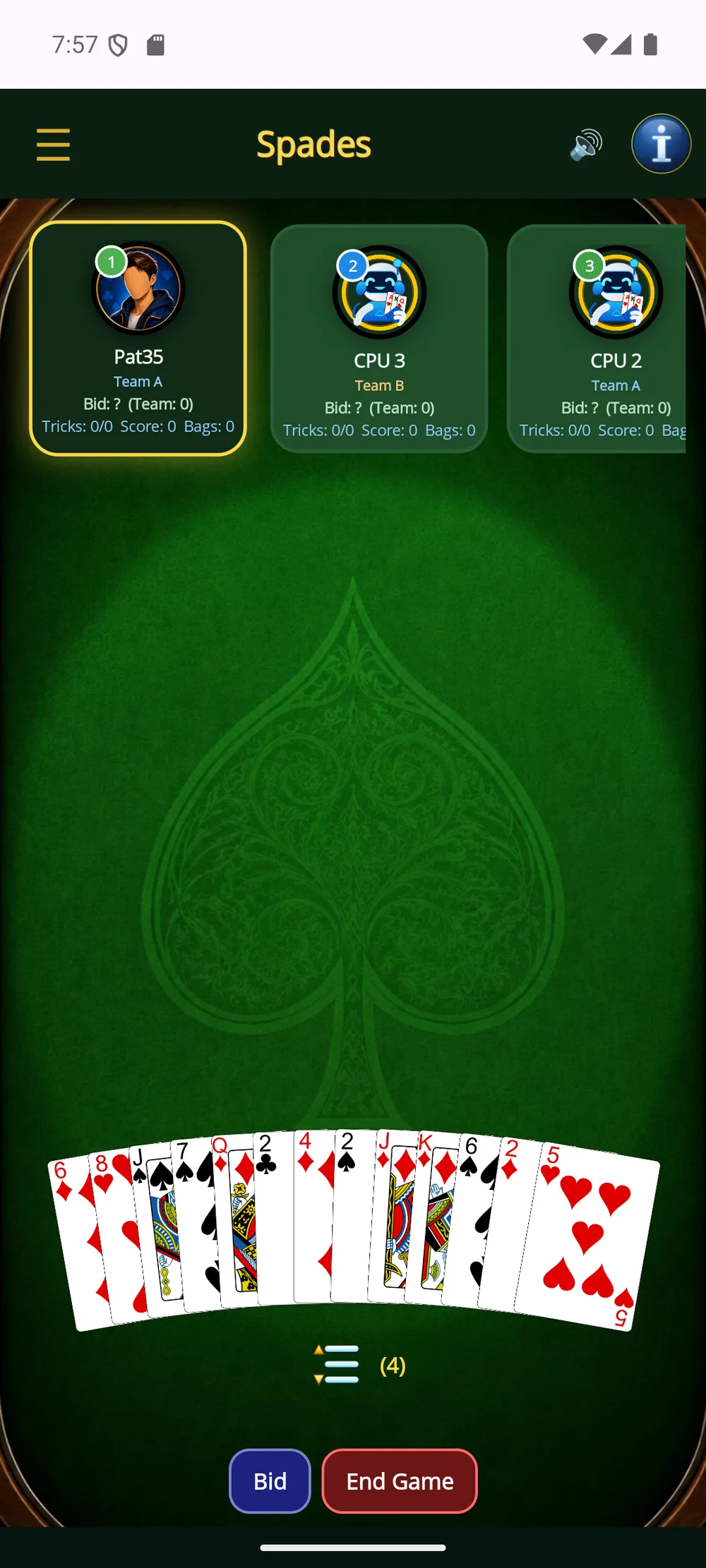
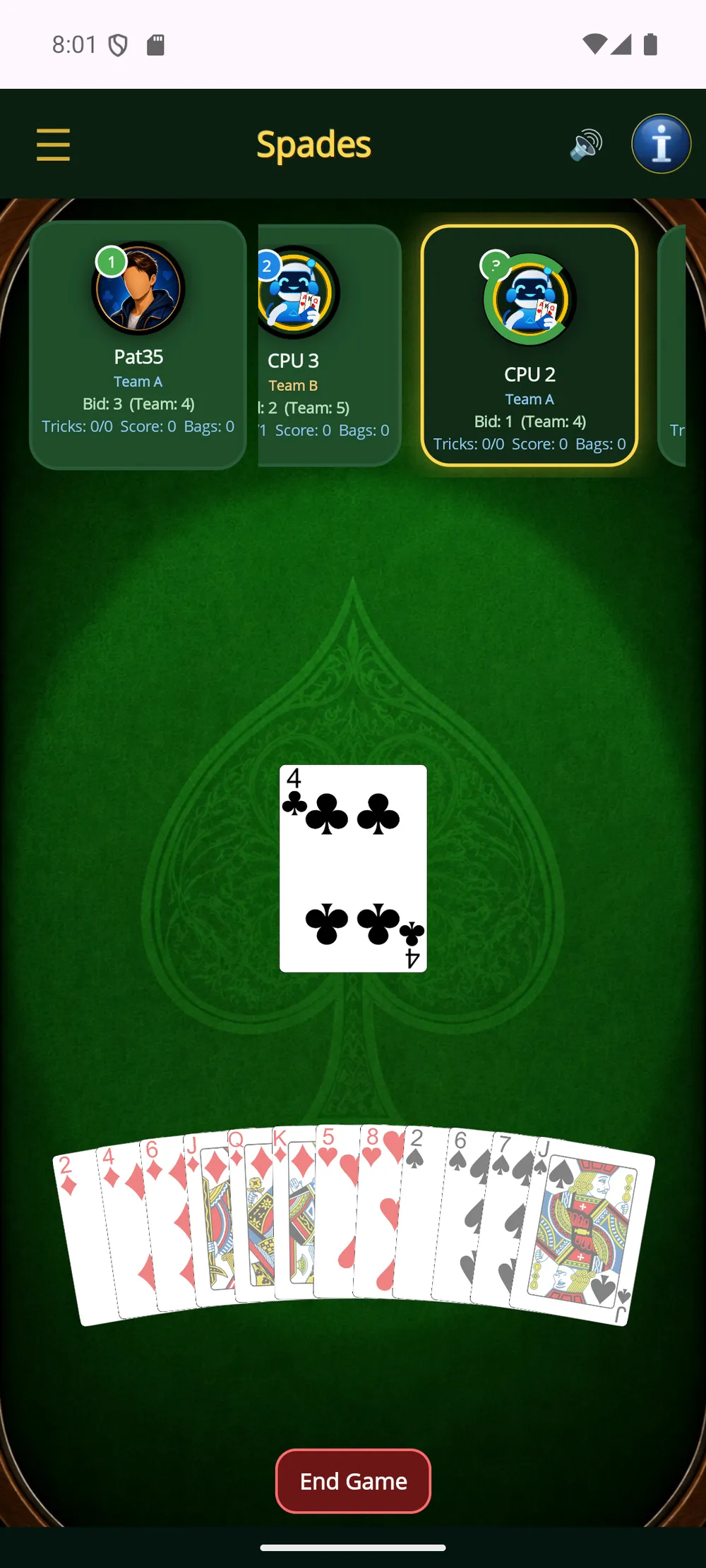
- Each player card shows bid, tricks taken, team score, and bags at all times, so you can read the state of the hand at a glance.
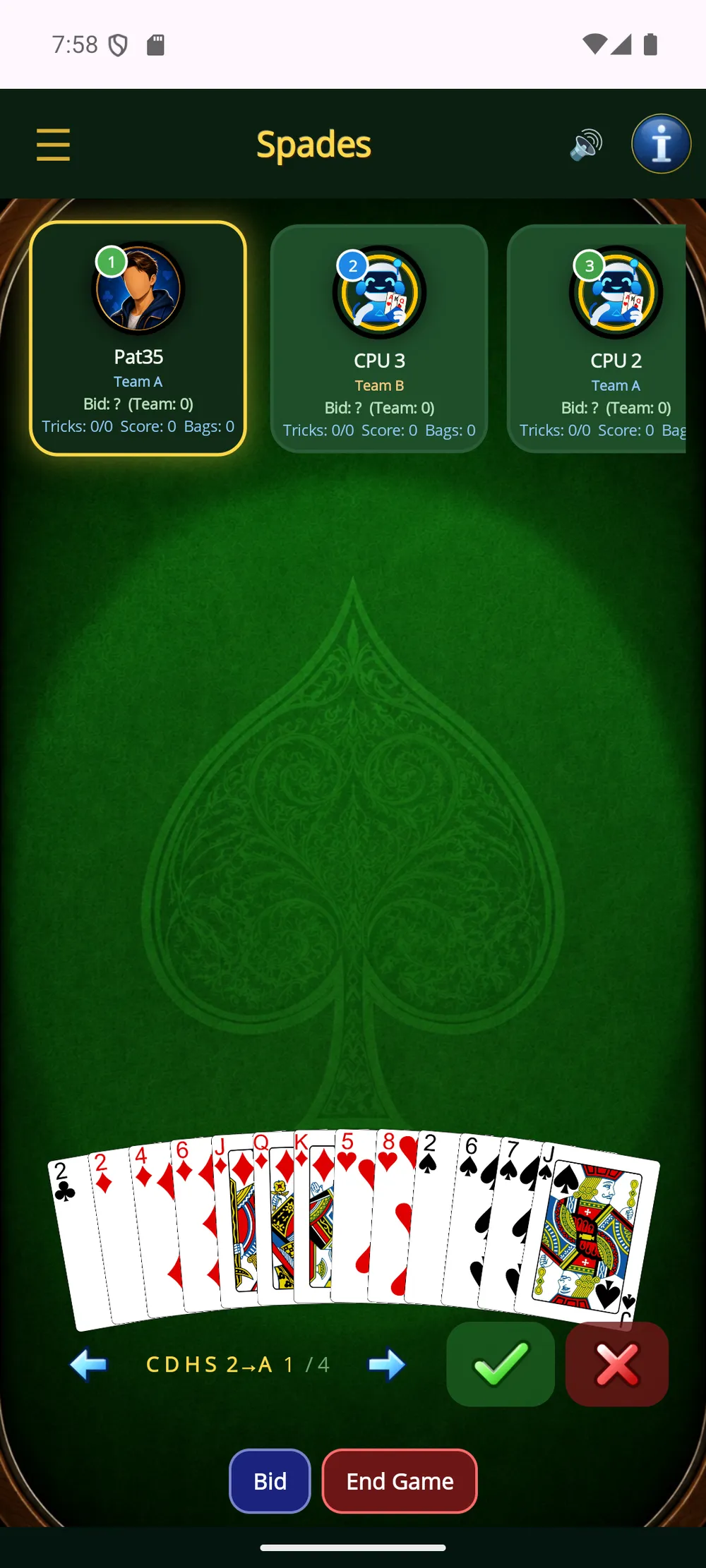
- 13 cards are dealt to each player. The arrange helper, which sorts your hand by suit before bidding, is a Premium feature.
Bidding
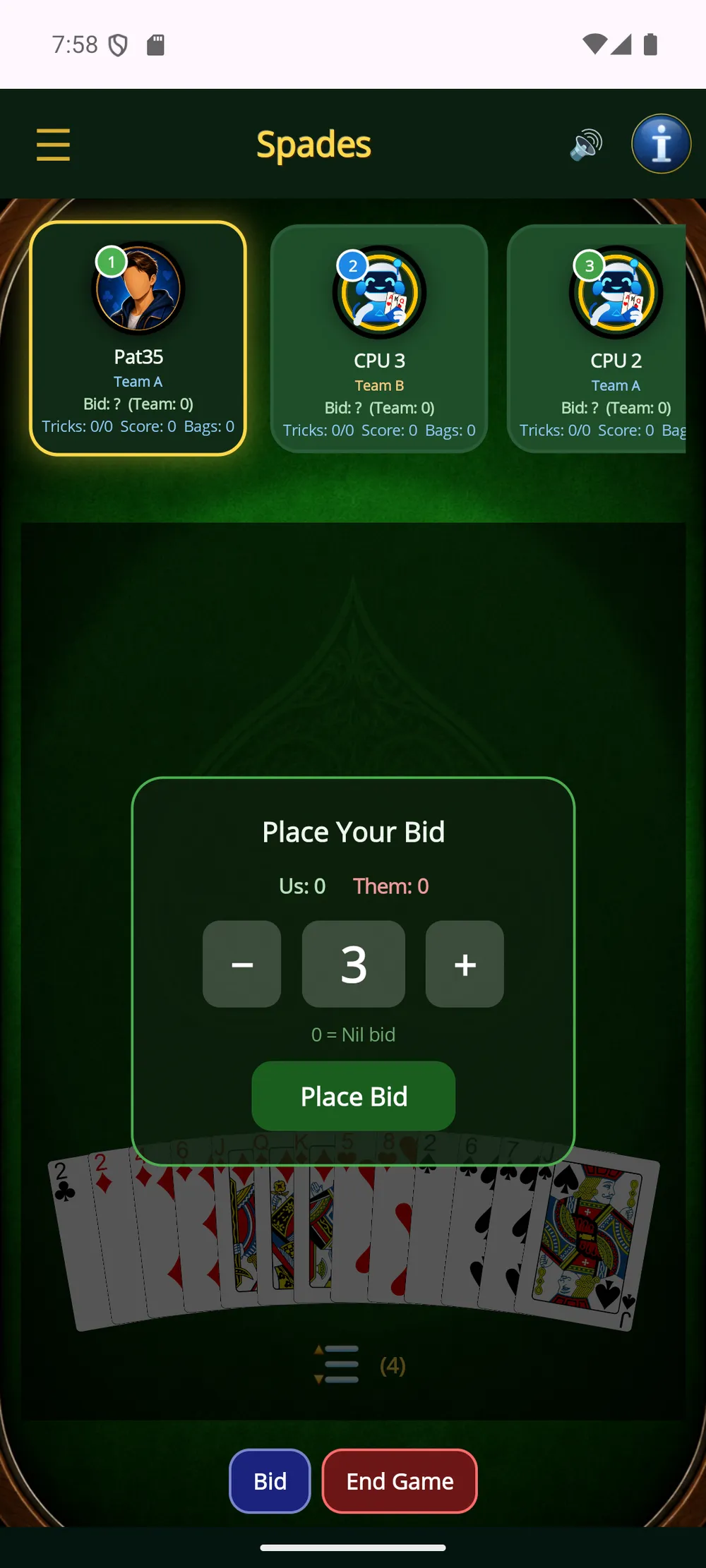
- Bidding starts with the first seat and goes round the table in seat order — every round, it never rotates; each player names the number of tricks they expect to personally win (0–13). Your team's contract is the sum of both partners' bids.
- Count likely winners: Aces and Kings in side suits, plus long spades. A typical starting hand bids 3–4.
- Bidding 0 is "Nil" — a bold declaration that you'll win no tricks at all. Made Nil = +100, failed Nil = −100, on top of your partner's normal bid.
- In the app, use the +/− dialog to set your number and tap Bid; the confirm row reads "Bid 5?" or "Bid Nil?". Both teams' totals are shown as bids come in.
Trick play
- The first bidder — the first seat, every round — also leads the first trick. You must follow the led suit if you can — the app highlights legal plays.
- Spades are always trump: if any spade is played to a trick, the highest spade wins it; otherwise the highest card of the led suit wins.
- You may not LEAD spades until they're "broken" — a spade discarded on another suit's trick — unless spades are all you have left.
- The trick winner leads next. Keep counting: how many spades are out, and how many tricks your team still needs.
Scoring, bags, and winning
- Make your team contract and you score 10 × bid. Fall short and you LOSE 10 × bid.
- Every trick over your bid is a "bag" worth +1 — but collect 10 bags and your team is docked 100 points. Don't hoard cheap tricks.
- Nil results are scored separately from the partner's bid, so a failed Nil costs 100 even if the team makes its contract.
- First team to the target score wins: 500 unless you change "Target Score" at setup (300 to 500). If both teams pass it in the same hand, the higher score wins; an exact tie is shared.
📊 Spades Scoring
Made bid: 10 × bid. Each overtrick (bag): +1, and every 10 bags costs 100. Failed bid: −10 × bid. Nil bid made: +100. Nil bid failed: −100.
❓ Spades — Frequently Asked Questions
How many players do you need for Spades?
Spades is played with 4 players. On Vanikar, empty seats can be filled with AI opponents so you can always start a game.
Can you lead spades in Spades?
Not until spades are broken: a spade has been played on a trick when someone could not follow suit. The exception is a hand of nothing but spades. Once broken, spades can be led like any suit.
What is a nil bid in Spades?
A bid to take no tricks at all. Make it and your team scores 100; take a single trick and it costs 100. Your partner's bid is scored separately, so the two of you can still make the partner's tricks.
What are bags in Spades?
Every trick over your team's bid is a bag, worth 1 point, but each time your bags reach 10 your team loses 100. Overbidding costs a failed bid; underbidding on purpose costs bags.
How does a Spades game end?
When a team reaches the target score, 500 unless you change it at setup. If both teams pass it in the same hand, the higher score wins; the app plays another hand on a tie.
📱 Spades in the app
A step-by-step look at a real game on the table.